
Transcript
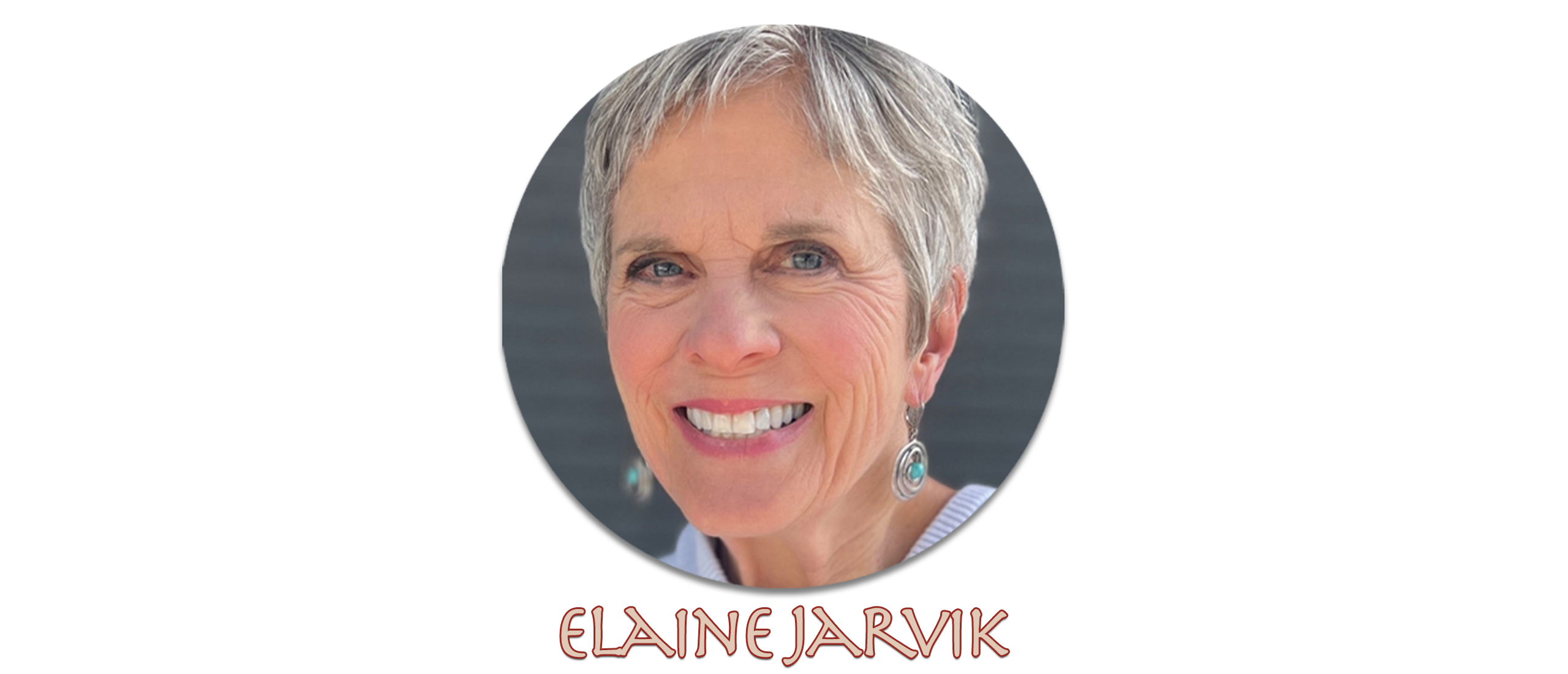
Julie: Today, we welcome Elaine Jarvik, who for 30 years was a professional journalist and still writes for the press. She also is a playwright, has authored eight full-length plays, two children’s plays, ten short plays, has two publications, and one appearance in an anthology. Welcome Elaine. Thanks for being here.
Elaine: Thank you, Julie.
Julie: In the process of learning about your process, I want to take you through a day, a writing day. What’s the best time for you to write?
Elaine: I don’t know if I have a best time. I write all day long, in and out. I have my computer set up on my dining room table and I just wander over there and sometimes, around four or five in the late afternoon, better stuff appears, like my subconscious kicks in and something comes to me.
Julie: That’s great. And also much different from anyone else. We think of ourselves as a paradigm of how it’s done and everyone must do it the way I do it. And as a matter of fact, no one does.
Elaine: I’m eager to hear how other people do this.
Julie: Talk about the four o’clock time when it seems to take over. You become the conduit for the material rather than the …
Elaine: I don’t know if I can talk about it. It just happens. I can’t make it happen. And it’s worked out that way and I’ve just noticed that why at this time of day does something come to me? I don’t know if I can explain it any more than that.
Julie: That’s fine. That’s fine. Thanks. This is related to that notion. What’s the percentage of inspiration versus perspiration in your work? How much of it is discipline and how much of it is inspired?
Elaine: 90% trying hard at it. I came to playwriting late in my life and I didn’t study it anywhere really. So I decided, and I don’t know if you want to talk about how it all came about?
Julie: I do.
Elaine: Okay. I was a journalist. One is so lucky as a journalist because the story is brought to you, and people say clever things, and you do write them down, and you create something. I was never really a beat reporter. I did hard news sometimes, but mostly I was a feature writer. And my favorite thing to do was what they call long form journalism. And so there were scenes and dialogue and a story was created. It was not just reporting. I created a story. So, a friend of mine came to visit who I went to high school with. He is, or was, a physicist and he had written a couple plays. He came to Utah to visit me and I thought, I think I could do that. And so we decided we would write something together. Of course I started with a musical.
Julie: Something easy.
Elaine: (laughing) Something easy, which never has been produced. And partly, I did that because I have two friends who write interesting music that I thought would work in a musical. And I knew nothing and I bought a bunch of playwriting books and just read them multiple times and then started trying to write this musical, which was awful. And I’d been to a lot of plays, but as a writer, I think I was drawing on sitcoms and it was silly to try to do it, but it was a way of learning. And then we decided we would write 10 minute plays for seniors and looking back on them. So, when I started doing that, I was 55 maybe, and so I guess technically a senior.
Julie: Can you talk about how you see older people now that you are in the group?
Elaine: I was relying on stereotypes. I don’t know if I can give you any examples except they aren’t how real people act or behave. Around this time that I was working on these senior plays, two things happened. One, I was still working as a newspaper reporter and another colleague and I were writing a series about aging. So this was on my mind. But again, these were not me, these were other people I was writing about. And also I took a play, I can’t remember exactly when this happened, but a few years after I started trying to write plays and had been reading these playwriting books, I was lucky enough through Salt Lake Acting Company to be in a workshop with J.T. Rogers, who later won a Tony and a Pulitzer, or just a Tony. And I got to see a play on a stage, a play of mine, 10 minute play produced with real actors. They actually memorized, so it wasn’t a reading. But Jane Luke was a wonderful actress, was in my play. And we talked afterwards and we decided that we would try to do senior theater. It was called the Senior Theater Project in which we would write plays by older people for older people with older actors. And we would take them around to senior residences and facilities of some sort. And I guess they were my guinea pigs trying out this form.
Julie: Tell me about how your process works. How do you know when you’re finished with a play? How do you know you’re done? Is there a way that it catches you or feels when you’re done?
Elaine: Well you’re never done. You just stop.
Julie: Tennessee Williams wrote the end of Glass Menagerie about three years before he died, and he redid the end of lots of plays. For a production he would do another end or another scene. Yeah. Kept doing it.
Elaine: Yeah. So I don’t have an ending in mind when I start. I think some people do. (6:29) They write to something. I don’t do that. I think endings are the hardest part.
Julie: Is there a relationship between your work as a journalist and the structure of a story and your work as a playwright and the structure of that play? Does that function at all in your conscious mind?
Elaine: First before I talk about structure, the thing I worked hard at as a journalist was grabbing the reader and pulling them in and letting them understand why they should be reading this story rather than a straight news story. In a feature story as opposed to a straight news story, you would start with a scene but here’s why this story is important. So I guess maybe I try to start a play with something that will pull somebody in. With feature writing you’re sort of building to something in the same way a play would be but not entirely.
Julie: What is the relationship between events that have actually happened to you, people you’ve known and the material that ends up in a play? How much of it is autobiographical in a sense?
Elaine: Because I feel like I don’t have a great imagination, I think every character is some part of me, but especially the main characters would be some part of me, my neuroses or my questions about life. I usually start a play with an idea, a question. I think some people do start with a character or a story. I think that would be a much better way to start with a story. My son always makes fun of me because I start with an idea and I don’t know what to do with that idea. Then I have to find out who could embody this idea. I’d start with a question I’ve been wondering about. Most recently, the question was, could an atheist win a major election in the United States?
Julie: And the answer was?
Elaine: I think no. I think the answer is no. What do you think?
Julie: I think yes now.
Elaine: So that question, could an atheist win a major election, I didn’t want to have a presidential election. I eventually settled on a school board election which I think is also a problematic kind of election nowadays and then that morphed into something else.
Julie: Is there any play that is in the canon out there that you’ve learned a lot from, loved, wished you had written? What would it be?
Elaine: Many of those. The ones I’ve re-read over and over, David Lindsay-Abers’ plays, Good People and Rabbit Hole, David Auburn’s Proof, re-read a couple plays by John Kolvenbach.
Julie: Mm hm.
Elaine: I like the humor in these plays, in David Lindsay-Abers and John Kolvenbach. So I wish I could be funnier, I wish I could be Julie Jensen funny.
Julie: You are very funny. That is what attracted me to your work initially.
Elaine: Oh, thank you.
Julie: The dialogue surface is funny, surprising, it pops up. It’s really exciting. Anything you’ve written is like that.
Oh, thank you.
Julie: Even though it may be very serious.
Elaine: Oh, thank you. I remember reading Sarah Ruhl before I started writing The First Falling, a play I wrote. There’s something otherworldly, fantastical in a subtle way. Sometimes I just try to emulate. In high school, we had a wonderful English teacher, and the assignments were right in the style of Hemingway and T.S. Eliot meet at a bar or something, you know, and they have a conversation and you write in that style. I don’t want to copy another person’s style, but I have learned from reading those people.
Julie: Thank you. What about an idea that sparks your interest and presents a challenge that you want to deal with, then goes south? What happens to it?
Elaine: I just keep at it always and always do something which maybe really doesn’t work, but I finish it at any rate. But one thing I’m thinking of is, I tried to write a play. I did end up writing a play about Susan B. Anthony on the 100th anniversary of women getting the vote. And I started out writing a play that was a sweeping history of Susan B. Anthony. It started on a street corner where she first met Elizabeth Cady Stanton, and they talked about pantaloons or something. And it was going to just be this sweeping thing. And I showed it to my friend Tim Slover, who teaches playwriting at the University of Utah. And he said, “Well, when you write a play, a history play like that, it’s like skipping a rock into a lake. And it’s just these little ripples, but it’s not anything dramatic.” So I was going to give up entirely, but then I thought, well, wait, maybe if I just picked a moment, a day, and I’d read, of course, a lot of books about Susan B. Anthony. I’m always afraid to start. So if I can read lots of books, then I don’t have to begin writing. So I had read some books about her and I remembered one day in her life where she had shown up at the house of Frederick Douglass, his widow’s house. He had died the night before. And I thought, well, that’s interesting. And so I started from there.
Julie: Thank you. That’s a fabulous play. Are you excited by anything now that you may not have thought of before, or you want to (12:28) try something else, experiment with something?
Elaine: Well, two things come to mind. I have tried to write plays with other people and it’s very difficult, I find. I think maybe I’m too controlling. I don’t know. But I did write a play with my daughter and I am currently writing a play with Matt Bennett, and I feel like I’m just his sidekick. He’s so smart and funny. But I’m also trying to write a one-person play with…
Julie: Three people.
Elaine: With three people. An actress and one other playwright. And we’ll see how that goes. But even just the form of a one-person play as just mostly monologue, some dialogue, but it’s just the one actor. So that’s a new thing I’ve never tried before. A new idea I just had very recently and it relates to the play I had abandoned. That play I abandoned was about Margaret Sanger, and I was again trying to pick a moment and it was when she had gone to visit Gandhi in India and talking about birth control. But I’ve been thinking a lot about why people have children and why they don’t have children. And I’m just curious, do we have too many people in the world? Do we not have enough people? Which people should be having children? There was a time in the 1920s when people in power, certain people in power wanted just white women to have lots of children, and it seems like we’re there again. And so I was thinking of working with a friend, a writer who’s never written a play, but that we could interview people, and somehow it’s slightly related to your play PG Anon, except it’s not, oh, what shall I do? I’m pregnant, but should I have children or not? Why do I want to have children? Why do I not want to have children? So maybe to interview people and do a sort of mix of journalism and playwriting, which have done before called Merry, M-A-R-Y, Merry Christmas.
Julie: Thank you. What about, for lack of a better word, theatricality? What about the actual presence of actors in front of you, live actors in front of you and their capacity to do things physically? What about that appeals to you rather than keeping the product on the page and writing a novel or story or newspaper story?
Elaine: In the beginning, I just had people sitting in some chairs talking to each other, so I didn’t understand theatricality really. And I think my friend Julie Jensen may have mentioned that it would be a good idea to have theatricality. I’m not an actor. I can’t picture what these people can do. Most recently in a reading of my play Sonny in the Dark, Matt Bennett, a playwright but is also an actor, just jumped onto the stage in a way that it was sort of in my mind but not in the way he had done it. I think I really still don’t understand what these people can do. It’s very appealing to me and I’m excited by it. But I think I turned to fantastical things in plays so that I could force myself to not just have two people talking. The first time I did that was a play that I wrote called The Coming Ice Age. And I had an actor. She had been cryogenically preserved and she appeared in the play, the wife of the main character. And he also appears going through sort of a tundra after his wife dies and he’s carrying a lot of his possessions as if he’s escaping some war-torn country or something of grief. That was I guess the way I could understand more than just somebody sitting there talking. I don’t think I answered your question.
Julie: You did. Thank you. Who else besides you reads your work before you let it go to actors or a competition or a theater?
Elaine: I have a friend. Sometimes we gather at a coffee shop and I’ll read some scenes that she’s written for a novel she’s writing and I’ll give her a scene or something. But she’s not a playwright. I have another friend who is also writing a novel, also not a playwright. I sometimes share that with her. These are smart people. And even though they don’t know playwriting that form, they are smart. And so those two. Sometimes I can maybe convince my daughter. I have to really beg, I mean beg, beg, beg if she’ll read it. She says smart things. Other than that, I don’t have any playwright friends I want to bother. It’s hard to convince somebody that they should read your work.
Julie: You think. I doubt that it’s really true. I bet they…
Elaine: No, I mean really. I just don’t want to bother anybody over and over again.
Julie: Yeah. I understand that too. Anne reads my work and she can’t stand to sit in front of something that she’s seen already. I do my life that way. I sit in front of stuff I already know for years.
Elaine: I’m an amazing tinkerer. I just go back over and over and over. And maybe that’s why the endings are so hard because I’ve just gone over the beginning part over and over again.
Julie: Do you change it word by word?
Elaine: Word by word. Yeah. And that’s what Barbara Kingsolver does. Not a playwright but a wonderful novelist. I think she goes word by word.
Julie. Yup. Yup. Do you feel as if actors, when they get hold of your material, help you understand it better or do they destroy the sound that you had in your head?
Elaine: Generally always helps.
Julie: OK.
Elaine: I don’t feel like I’m a natural dialogue writer. I think you just hear people in your head talking and you observe how people have talked. I can’t remember how people talk. So I think they all talk like me. And I try to make it different but it’s really hard for me.
Julie: That’s good. Yeah. Thank you. Yeah.
Elaine: But yes, playwrights always help me unless they are too young to understand what I’ve written about. The bane of a lot of playwrights, they just want to paraphrase.
Julie Yeah. That’s the bane of playwriting. It’s true. I know you’re a drummer. How does rhythm play in the work that you write?
Elaine: I do read everything I write out loud. So I think there has to be that flow of music. And that was always true when I was doing journalism as well. There’s just a woodenness to some writing. I am a very mediocre drummer so I don’t want to claim I’m a real drummer that really understands rhythm but I think I do understand the flow of the language. But again, I think all my people sound like me.
Julie: That is absolutely not true. I’m sorry. What’s your relationship to outlines? I’ll preface this. There was an interview, it was a long time ago, 30 years ago or so, with a bunch of professional writers, and they were everything from story writers to people who are journalists, all sorts of writers. And the question was, do you outline? And the answer in every case was, I know I’m supposed to. I wish I did. It would help me get it done faster if I were to do that. But I don’t. What’s your answer to that?
Elaine: My answer is the same as theirs. I never do an outline, and my daughter, who has written several novels and had them published, always makes an outline and maybe that’s more helpful for a novel. But she always says, well, you know, you could have saved yourself a lot of time. In the same way my son says you could have saved yourself a lot of time. He says if you’d had a story, she says if you’d done an outline. But to me, you discover as you go along what it’s about. And I also never quite understand my characters when I start and I just have them start talking and I learn who they are by the things they say often. Also probably a waste of time. But no, I never outline. I’d see where it’s going and then the discovery is the exciting part.
Julie: Great. One time I did do an outline and I felt as if I were satisfying an outline, that I jumped to A and then I got that done and then I went to B. And that discovery stuff. If I’m not discovering stuff in the middle or in the process, it seems dead to me and it is. Indeed it is.
Elaine: And it would feel dead to the audience. Oh, of course. And I’ve found some writers, usually baby writers, or inexperienced writers who, you know, feel as if they have to have an outline, and their work feels like that too. They’re jumping from A to B and C and then it’s very rote in a way. Do you like the process of writing? Does it feel good?
Elaine: It feels painful and also the only thing I want to do.
Julie: That’s a great ending. Okay. (they both laugh.) Thank you.
Julie: You’ve been listening to Calling the Muse, a series of interviews with Utah playwrights. I’m Julie Jensen, your host, and the audio engineer is Rod Daynes. Thank you.